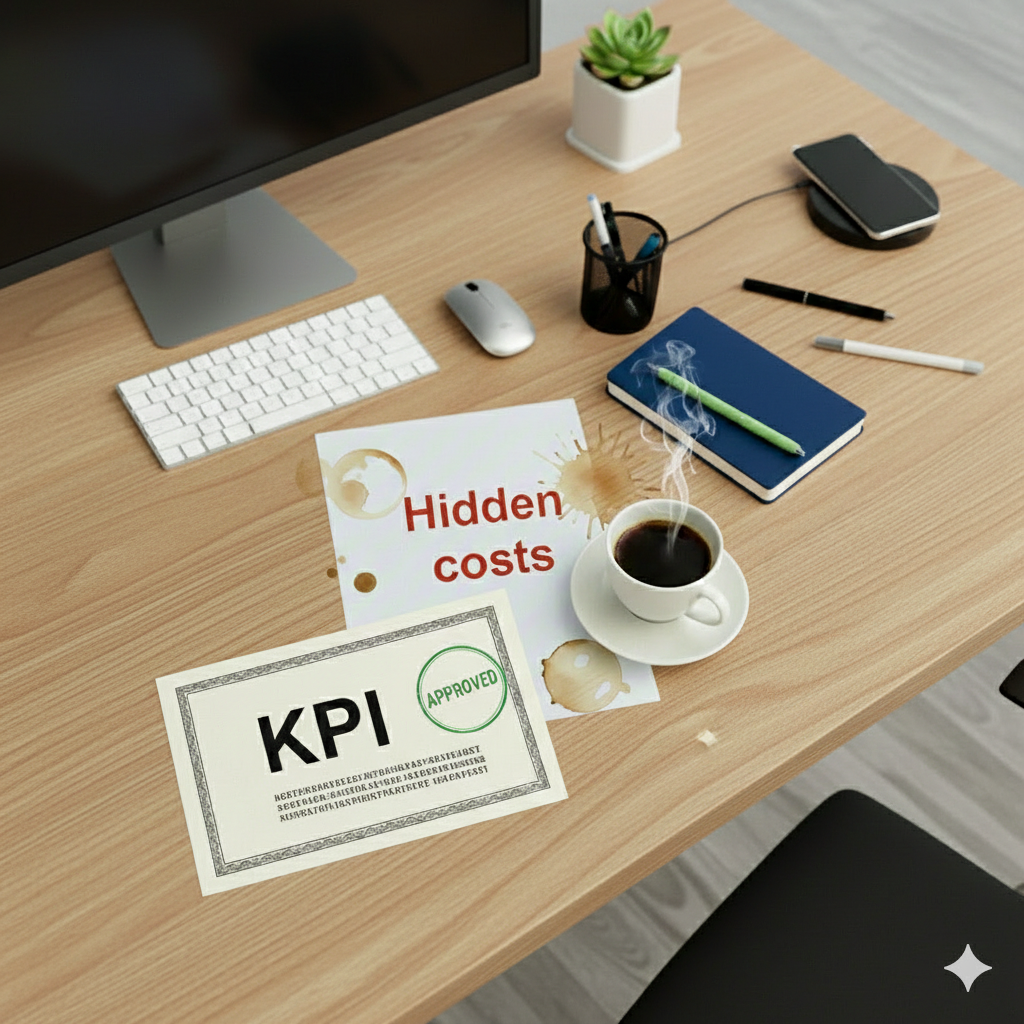
Do your (sales) KPIs really tell you the whole story?
This story is not new. I’ve experienced it often, and so have you.
The scenario is familiar.
Picture this.
The new year starts like a dream. At the company kickoff, the key message is clear:
“Every business unit has reached its objectives, and some have even gone beyond.”
Turnover targets have been met, some even crushed.
The best performers take the stage. Well-deserved prizes are handed out.
And that’s a good thing.
Celebrating wins is essential. Recognition fuels morale and inspires others.
But even the best stories deserve a closer look.
Because reaching KPIs doesn’t always mean the business is sound.
Some realities don’t show up in the selected KPIs, yet they matter. A lot.
Here’s the part of the story that often goes untold.
What the KPIs don’t say
1. Starting all over again
The new-year pipeline is almost empty. All focus was on closing the previous fiscal year, showing very few opportunities beyond Q1.
2. Signing deals at all costs?
Turnover is fine. Margin is not.
When KPIs focus on revenue only, margins disappear from the conversation. Are they even part of the compensation plan?
3. A false sense of confidence
KPIs look good… yet two major clients won’t renew their multi-year contracts next year. Until then, their revenue still inflates turnover.
4. The cost of overperformance
Results came at a price for the team: exhaustion, burnout, resignations, and damaged morale.
5. Tactics are not forever
Last-minute discounts closed big deals in December, creating habits that will be hard to break—for both clients and sales reps.
6. New clients are in. What about the existing customer base?
Are we engaging at C-level, or only through Procurement?
We close deals, but do we truly partner with our largest customers? Competitors might.
7. Business visibility and predictability
CRM data has proven unreliable because sales adoption of the platform is low.
Meanwhile, the most trustworthy forecasts come from Finance, creating a disconnect with Sales.
Is this really a solid foundation for the new year?
Especially knowing one thing is guaranteed: this year’s targets will be higher than last year’s.
Declining margins, lost customers, and hidden costs must be offset by higher targets.
So how do you outperform last year while keeping fundamentals sound and teams motivated?
Here are a few paths.
How to build sustainable performance
1. Improve sales practices
Be more effective, not just busier.
Qualify better. Focus resources where it truly matters.
Use multidimensional KPIs that reflect business complexity.
And fully leverage your CRM to steer strategy, not just report numbers.
2. Treat existing customers well
Your current clients are your strongest (external) business assets.
Do you know their strategy, priorities, and ambitions?
Do you co-build, or just supply?
Aim to be a partner, not a vendor.
3. Treat your team even better
Your team is your strongest (internal) business asset.
Pay close attention to motivation, skills, growth, and leadership.
Is leadership empowering or controlling?
Is it a collaborative team, or a collection of individuals?
In summary
KPIs are necessary when they are carefully chosen.
Always keep in mind that leadership isn’t about controlling indicators.
It’s about steering the ship with a unified crew toward a shared objective that benefits both teams and clients.
KPIs don’t run companies. Leaders do, by choosing the right ones and acting on what they reveal.
Before celebrating green dashboards, ask yourself:
👉 What story are these KPIs really telling, and which one are they hiding?

